Technical reference · English

Product photography
View full sizePower instrumentation
Monitor supply quality and investigate disturbances
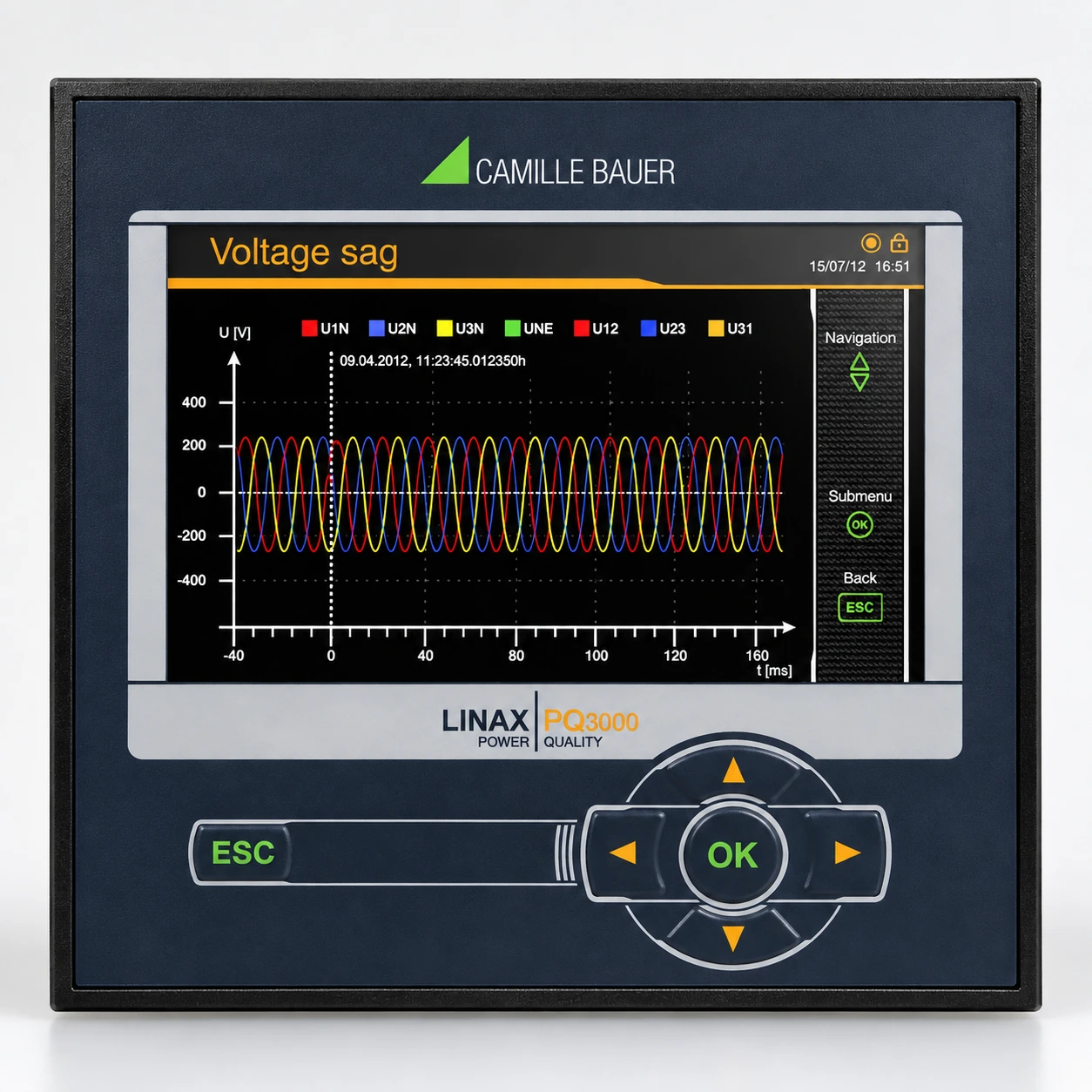
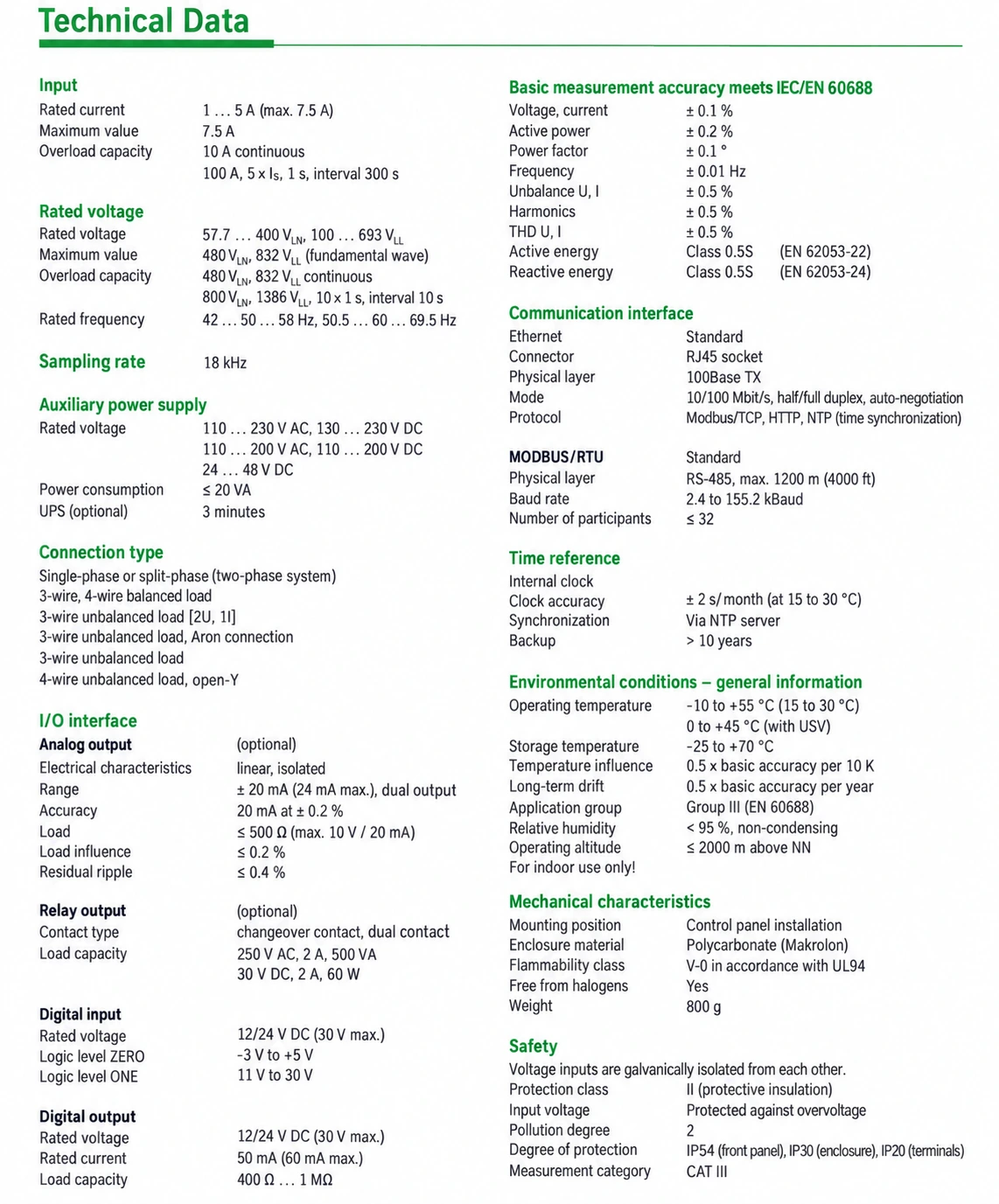
LINAX PQ3000 provides continuous power quality monitoring in a fixed panel-mounted instrument. It analyses frequency, harmonics, flicker and unbalance, and records events such as voltage dips, swells and interruptions. PQDIF export and assessment reports generated through the device website support investigation of disturbances and review of supply quality.
Explore technical detailsPRODUCT INSIGHTS
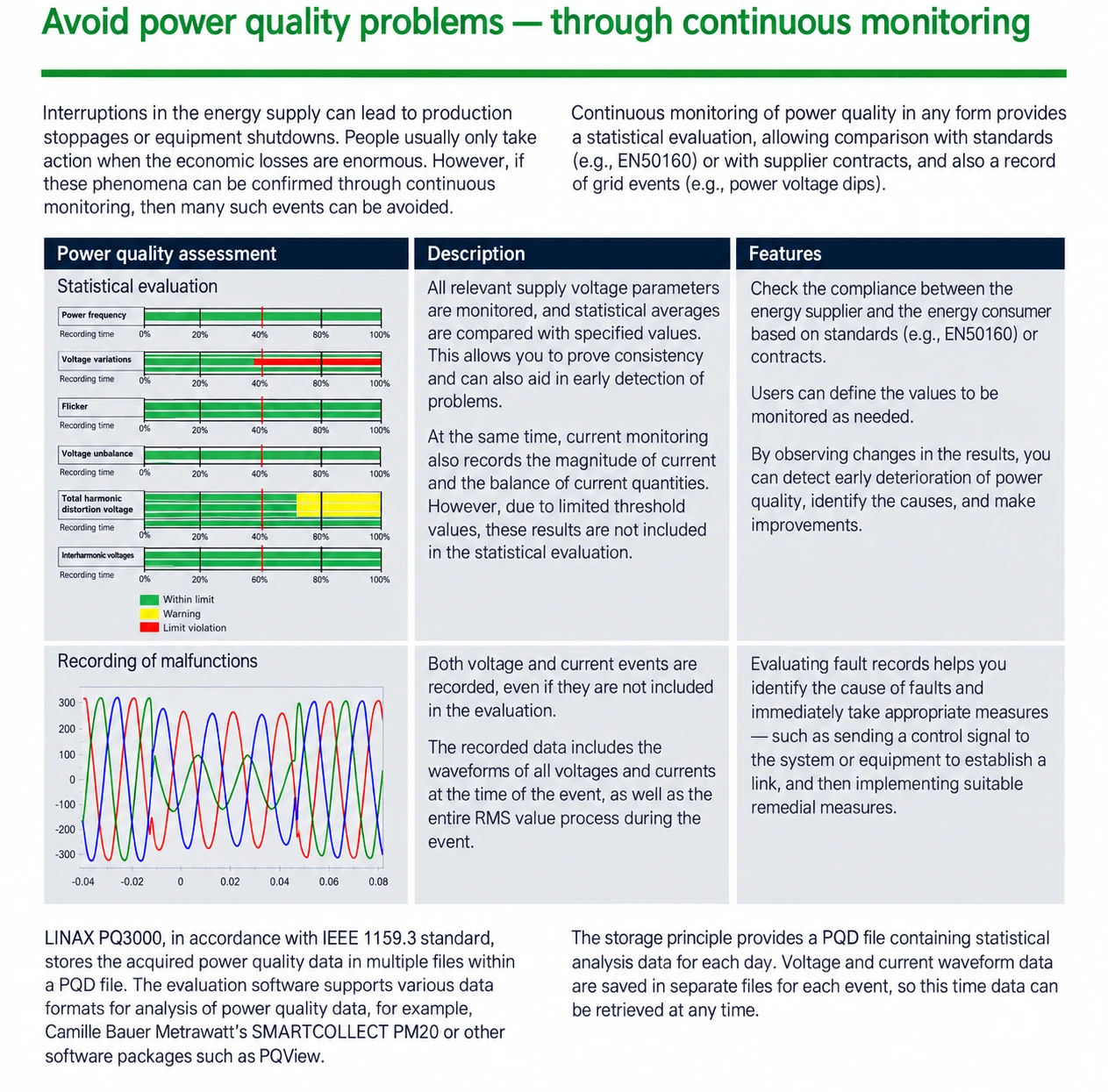
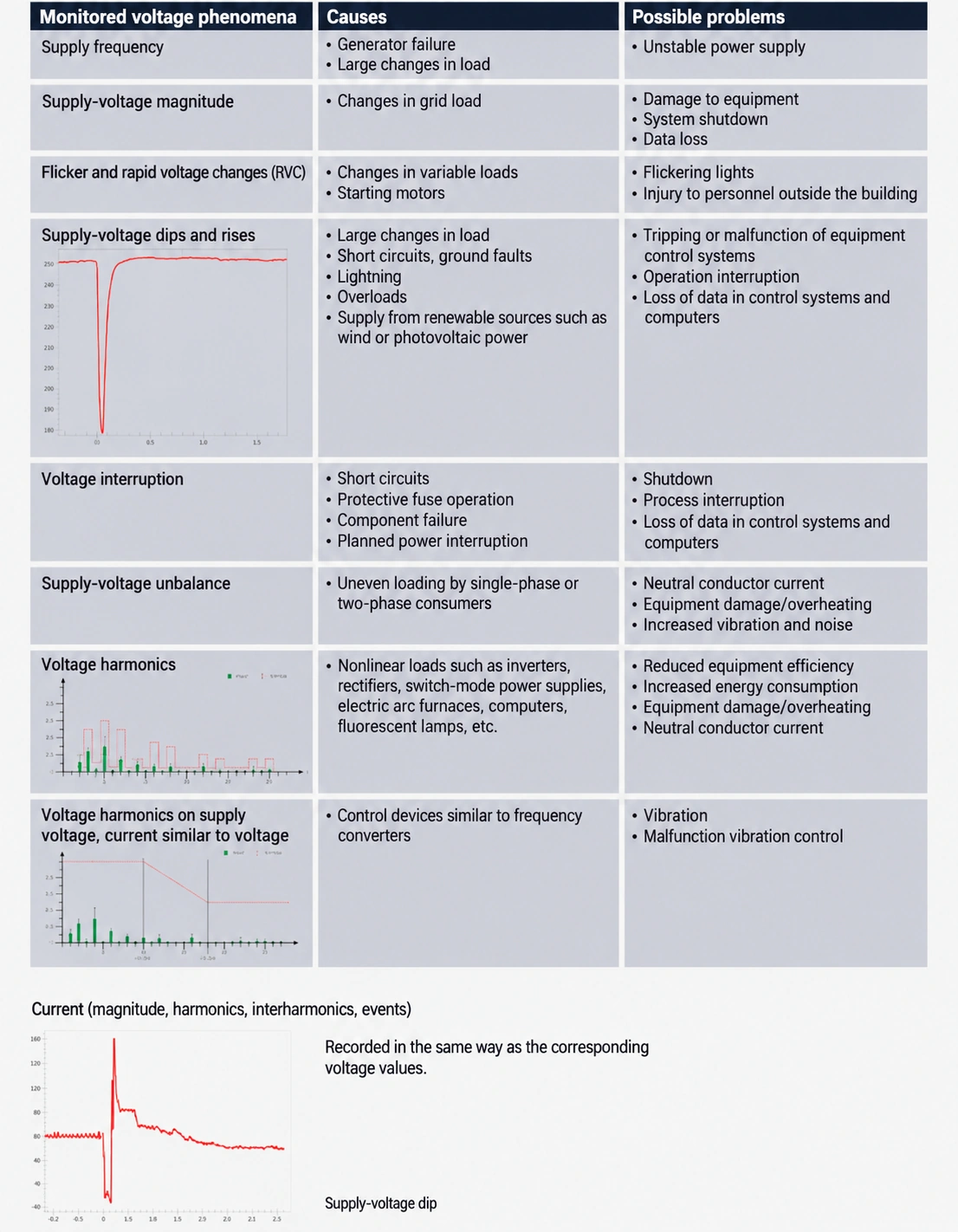
Monitor frequency, harmonics, flicker, unbalance and other parameters for ongoing observation of supply quality.
Record voltage dips, swells, interruptions and other events, then use their waveforms to investigate disturbances.
PQDIF data exchange and reports from the device website provide material for supply-quality review and event analysis.
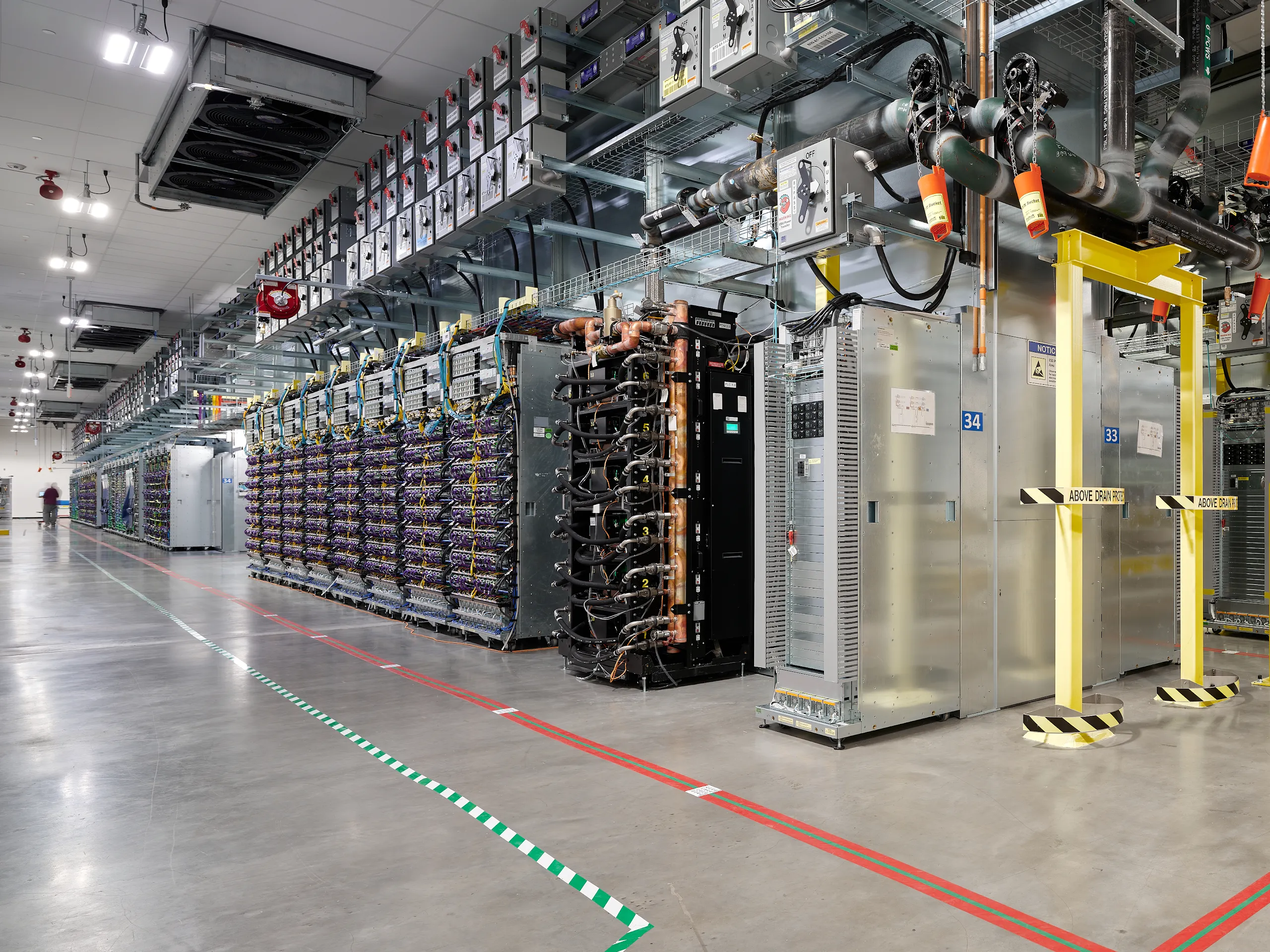 Application concept
BUILT FOR YOUR ENVIRONMENT
TECHNICAL SPECIFICATIONS
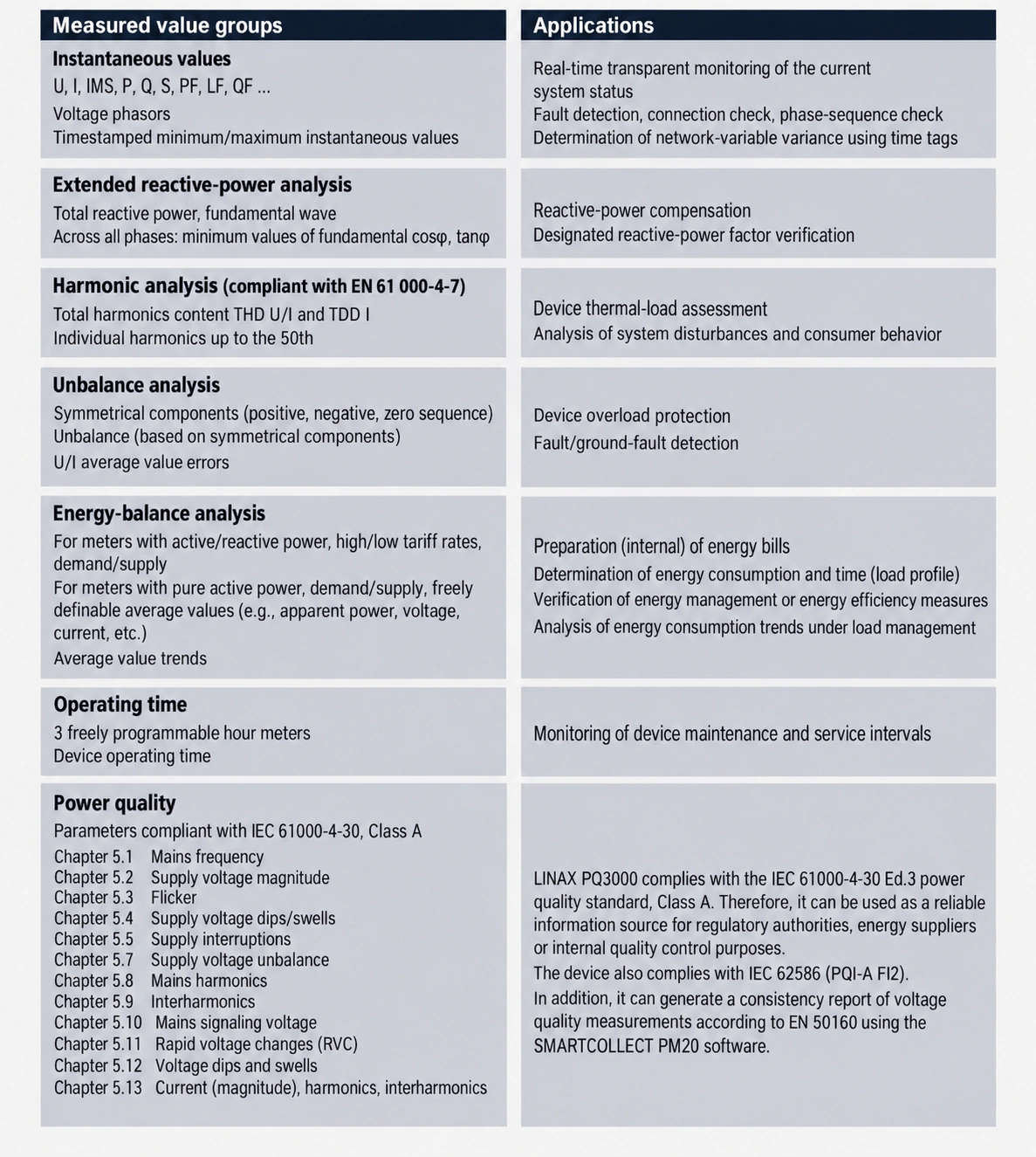
IEC 61000-4-30 Edition 3 Class A power quality analyzer.
Monitors power quality parameters including frequency, voltage and current, harmonics and interharmonics, flicker and unbalance.
Records events including voltage dips, swells, interruptions, rapid voltage changes and current swells, with event waveforms available for review.
Provides power quality events and statistical data in the standard PQDIF format.
Generates PQ-Easy Report PDFs through the device website for assessing measurements against rules such as EN 50160.
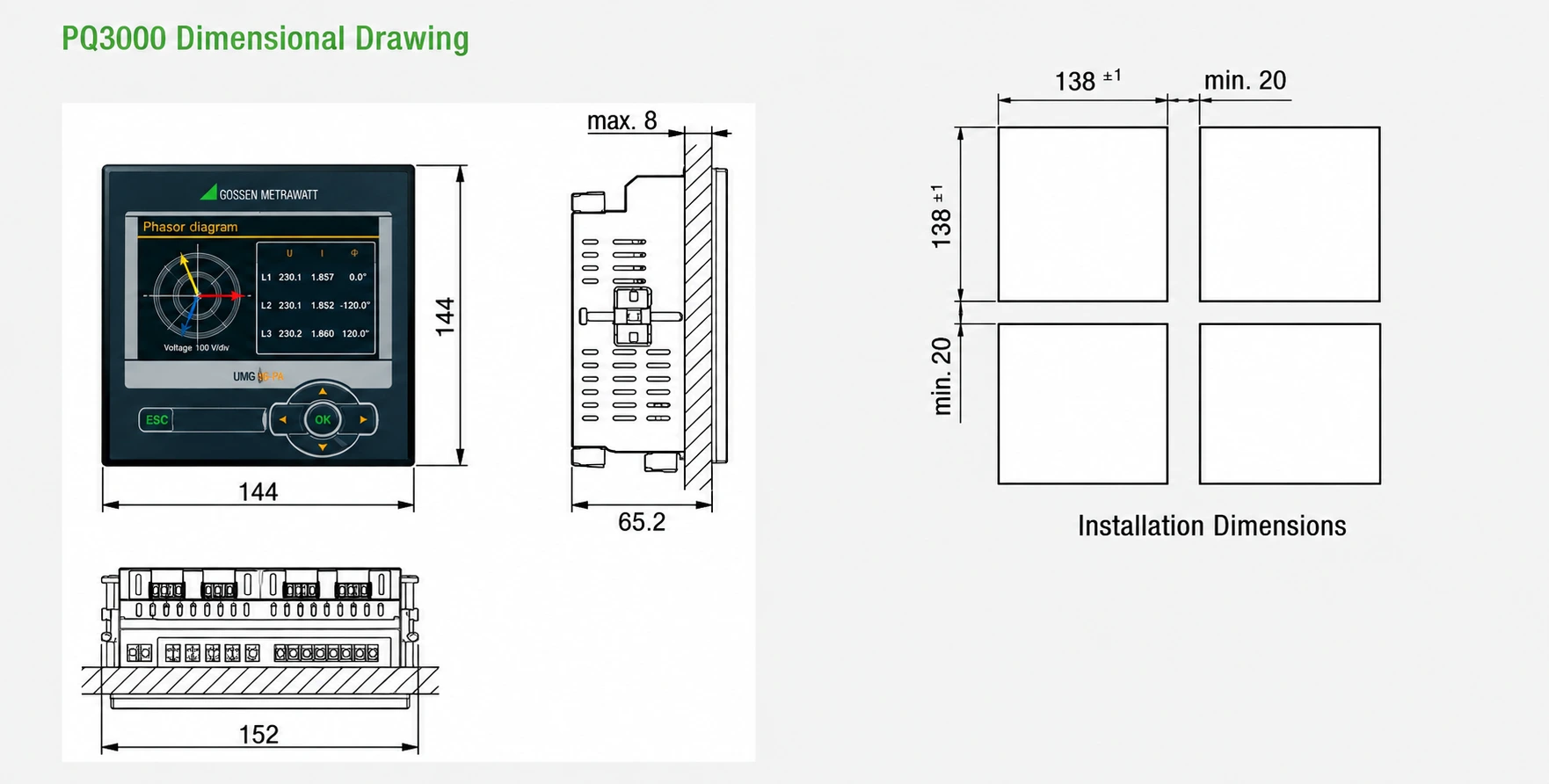
144 × 144 mm panel-mount format with a colour TFT display.
Functions such as RS485, IEC 61850, PROFINET, I/O and the integrated UPS depend on the selected hardware configuration.
METAS certificate 213-01865 applies to PQ3000 hardware D and firmware 1.15-4973; the certificate is dated 2019-11-08.
Measurement, reporting and extension functions depend on the installed hardware, firmware and options. The METAS certificate applies only to the stated hardware D, firmware 1.15-4973 and test scope.
Technical reference · English
Select the model and configuration for your supply system, load and installation conditions. Use the applicable product documentation for installation and operation.
EXPLORE MORE
Power instrumentation
Measure electrical quantities and analyse network conditions
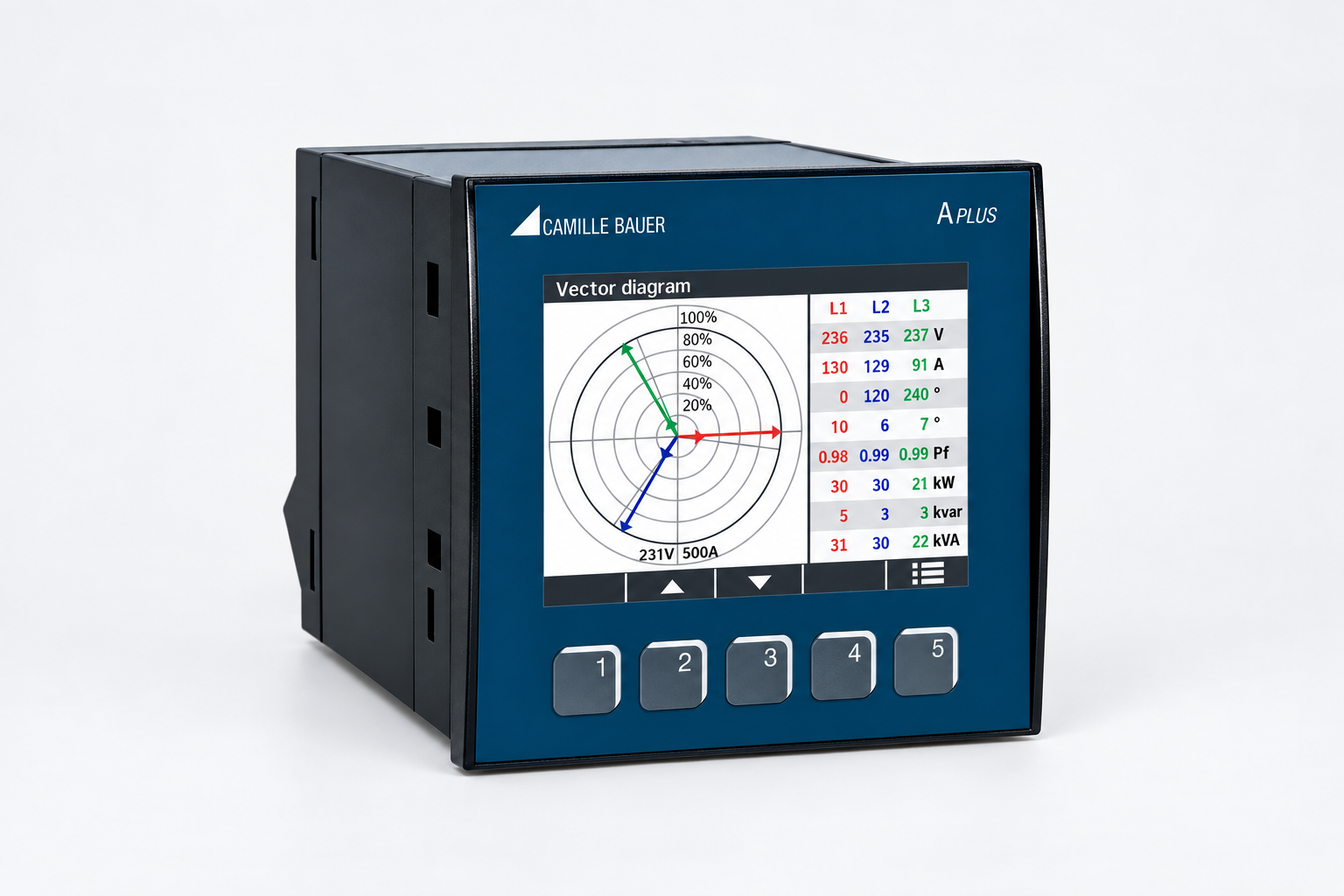
APLUS measures electrical quantities and supports network monitoring and power-quality analysis, with panel-mounted and DIN-rail configurations. Display, communications, I/O and data-logging functions depend on the selected version. Applications include power distribution, industrial facilities and building automation.
Power instrumentation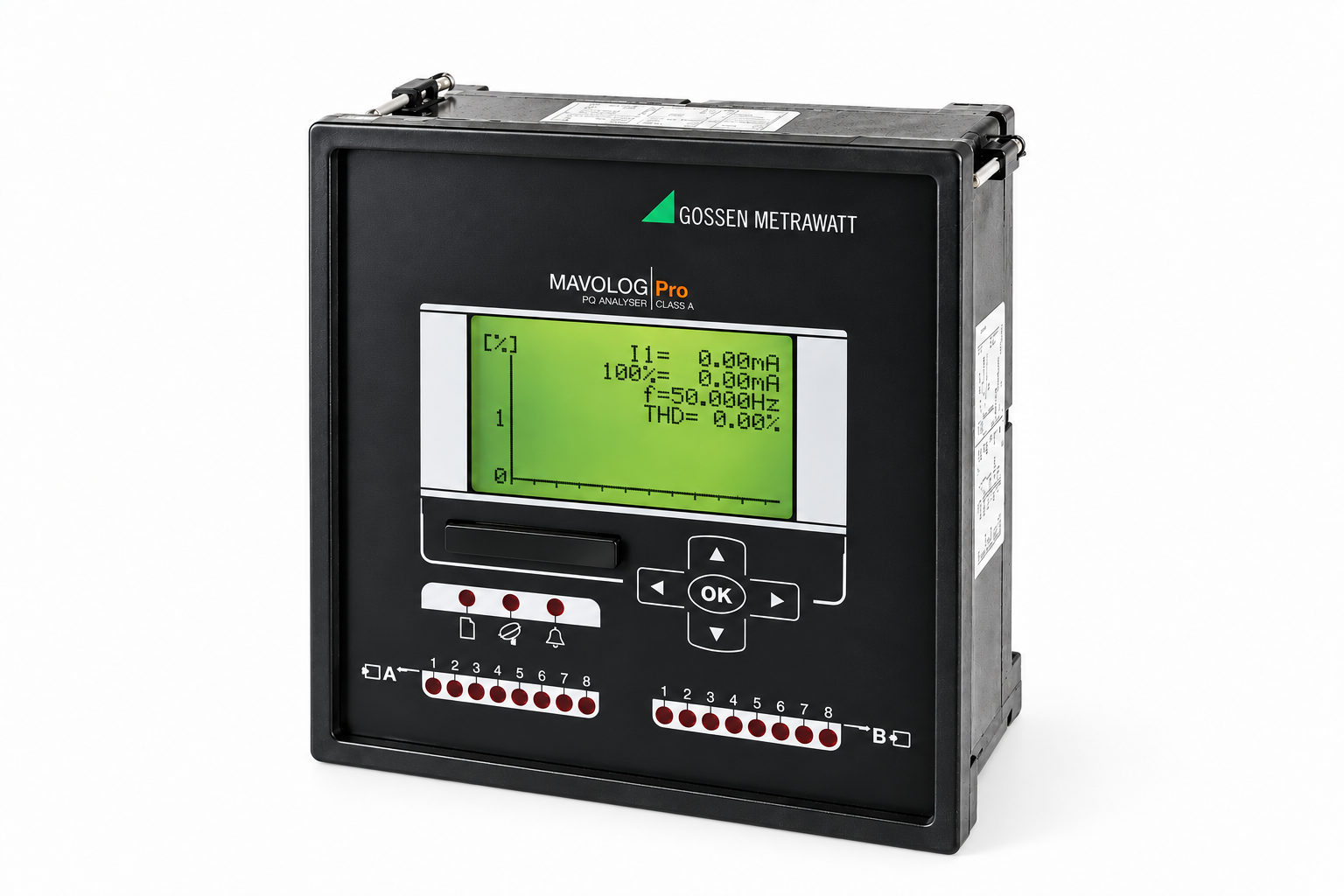
Power instrumentation
Instruments for power-quality measurement and analysis
MAVOLOG provides an instrument option for power-quality measurement and analysis. First define the supply issue to be investigated, then confirm the measurements, configuration and performance in the product documentation to select an instrument suited to the task.
Power instrumentation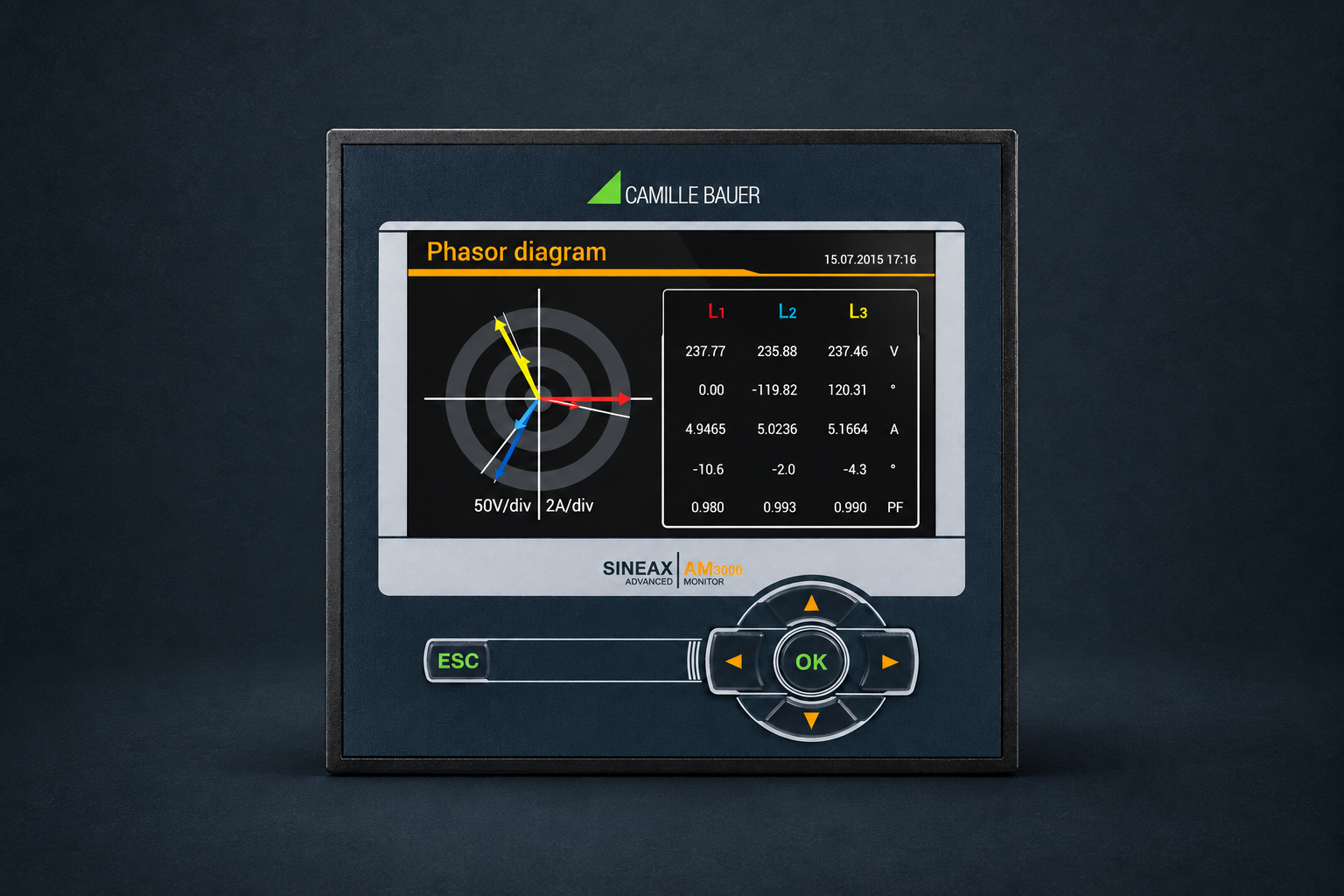
Power instrumentation
Understand load changes through measurements and trends
SINEAX AM3000 monitors network conditions and energy consumption. It provides average-power and trend analysis, with optional load-profile recording including interval minima and maxima. Its panel display supports local review, while Ethernet-equipped versions offer web configuration. Extension interfaces are selected for the application.
Power instrumentation